SEO (Search Engine Optimization) is an important part of digital marketing. It helps a website appear on search engines like Google and Microsoft Bing. When I started learning about SEO, I found that it’s not just about getting on the first page of SERPs (Search Engine Results Pages). It’s about creating useful and relevant content that connects with people. The main goal is to match search queries from your target audience, bring qualified traffic, and improve your site’s visibility. Whether you have a blog, online store, or local business, knowing how to use the right keywords can increase your traffic and help you grow for the long term.
As time goes on, technology keeps changing and so does SEO. Today, people use voice search, and AI (Artificial Intelligence) gives short, ready answers. Even a single click on a mobile screen can affect your online visibility. In SEO 2026, the focus is on better website structure, more organic traffic, and combining SEM, PPC, and SEO services for stronger results. Modern SEO is not just about skipping ads — it’s about using smart digital marketing strategies so that your pages stay visible and people keep visiting them.
Through my experience, I’ve learned how different types and aspects of SEO help both beginners and businesses. By optimizing your products, services, or sharing your expert knowledge, you can stay updated as SEO changes. Think of this as a simple guide that helps you understand the value of SEO and how it can help you grow in the digital world.
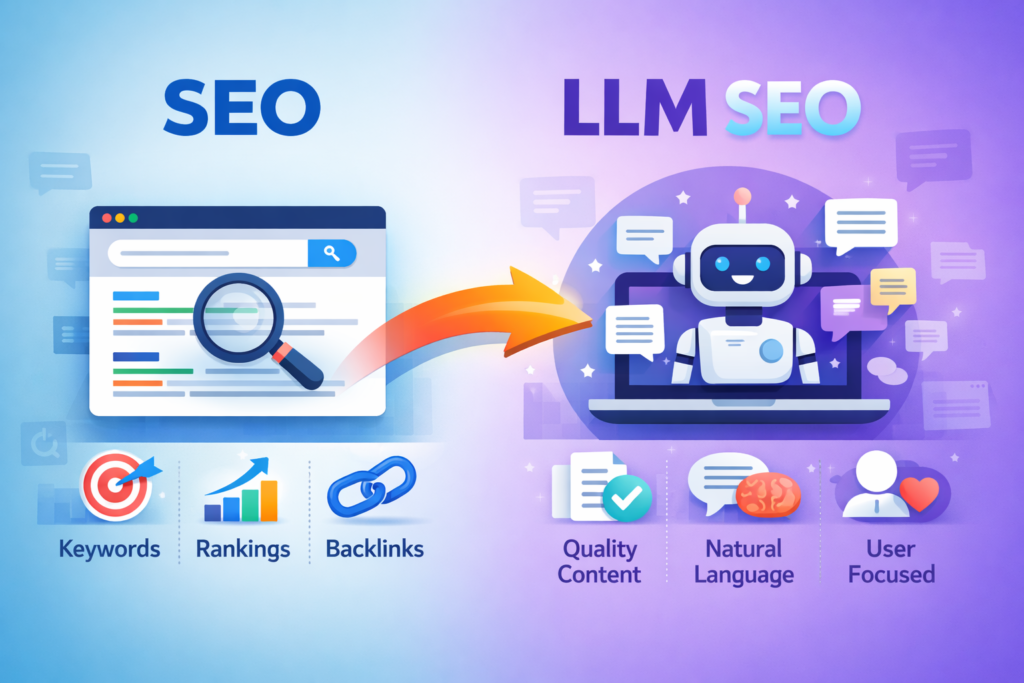
LLM SEO
Search is changing fast, and that’s why we recently updated this blog with a fresh focus on LLM SEO. Instead of just adding keywords, we worked on making the content clearer, more helpful, and easier to read for real people. We improved the flow, added simple headings, and used natural language so both search engines and AI tools can better understand and share the information. This update also includes better internal linking and more relevant topics, helping readers find exactly what they need without confusion. The aim is simple create content that feels human, answers real questions, and performs well in search results over time.
Why SEO is Important
SEO as a Powerful Marketing Channel
When I first learned about SEO (Search Engine Optimization), I realized it’s not just a popular term — it’s a complete marketing channel that helps websites grow through organic search results.
In 2019, a BrightEdge study found that 53% of all website traffic came from organic search, showing how important SEO is for brands, businesses, and organizations that want real growth.
Every day, more than 8.5 billion searches happen on Google Search, and since Google controls 91% of the global search engine market, it’s clear why being on top is so important for visibility and audience reach.
The Global Impact of SEO
From my experience helping small startups grow, I’ve seen how the global SEO industry, expected to reach $122.11 billion by 2028, helps companies connect with users right when they start their search journey.
Whether people type, use voice, or image search, they expect quick access to information from billions of webpages.
With more than 4.3 billion pages indexed on the web (as of September 2024), it’s not enough to just be online — your website must be search engine friendly to stand out.
How Search Behavior Has Changed
Today, people don’t just search on Google or Microsoft Bing — they also use YouTube, TikTok, and eCommerce platforms like Amazon.
A 2023 study showed how consumer behavior has changed:
- 56% of U.S. online shoppers start their search on Amazon
- 46% use a search engine
- Others search on Walmart (37%), YouTube (25%), Facebook (20%), Instagram (19%), and TikTok (19%).
This new trend, called Search Online Shopping Us, highlights how social media is becoming a strong search platform, especially among Gen Z, where 51% of women use visual platforms for shopping.
SEO vs Paid Campaigns
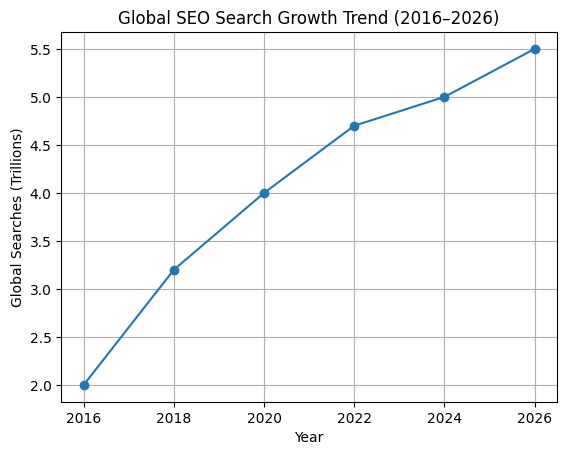
Because trillions of searches happen every year, SEO remains the main source of website traffic.
A brand or business that focuses on visibility, ranking higher, and outperforming competitors on search engine results pages (SERPs) can greatly increase its growth.
But today’s search landscape is highly competitive.
It includes features like PPC ads, AI Overviews, Knowledge Panels, Featured Snippets, Maps, Images, Videos, Top Stories, and People Also Ask boxes.
Companies that use sustainable SEO strategies, instead of depending only on paid campaigns or social media, achieve better and more lasting results.
Combining Paid and Organic Strategies
From a holistic marketing point of view, I’ve seen that when users interact with both paid and organic campaigns, it helps businesses grow faster.
Strong website content and active social media presence drive more conversions, visits, and sales.
When your site becomes authoritative and trustworthy, it ranks better, gains higher search visibility, and attracts quality traffic.
This builds trust, increases clicks, and improves the overall user experience.
Optimizing for Modern Search Features
One of my favorite parts of SEO work is optimizing for Featured Snippets, People Also Ask (PAA) boxes, and Image and Video packs.
These features give users quick answers, increase click-through rates, and make your site an authoritative resource.
New AI-powered search features — such as AI Overviews from Google, or tools from OpenAI, ChatGPT, and Claude AI — now provide summarized answers directly within search results.
So, your SEO optimization should help your content appear in both traditional search results and AI-generated summaries.
The Role of User Experience in SEO
No SEO workflow is complete without a focus on user experience.
A great user experience means your website loads fast, works well on mobile, and is easy to navigate.
I always check a website’s Core Web Vitals, which include key performance factors like:
- Largest Contentful Paint (LCP) – how fast the main content loads,
- First Input Delay (FID) – how quickly users can interact,
- Cumulative Layout Shift (CLS) – how stable the layout is while loading.
A smooth and stable page keeps users happy, improves retention, and increases satisfaction — the real signs of strong AI insights and effective SEO success.
Types of SEO: The Three Pillars of Success
When I talk about SEO, I like to tell clients to think of it like a sports team — every player has a special job that helps the team win. In SEO, there are three main players: technical SEO, on-site SEO, and off-site SEO. These three together form what I call the trinity of success.
The first type, technical optimization, focuses on improving the technical parts of your website — things like site speed, structure, and how easily search engines can crawl and understand your pages.
The second type is content optimization, also known as on-site SEO. This part is about creating content that connects with users and meets search engine guidelines. Here, you control everything — from the message, visuals, and tone, to your brand values, colors, and slogans. All these help your brand look stronger and more professional online.
The third type is off-site SEO, which builds your brand authority and trustworthiness outside your website. It includes getting links, working on platforms, and taking part in activities that grow your brand awareness and recognition. These actions help you reach more people, build loyalty, and create long-term demand generation.
From my own experience using Semrush Tools, I’ve learned that knowing both on-page and off-page techniques and keeping a balance between content and technical optimization makes a big difference. Even trying a 14 day trial offer of SEO software can show how technical, on-site, and off-site optimization work together to build lasting and sustainable growth.
On-Page SEO
When I first started learning about on-page SEO, I was surprised by how small changes on a single page could make a big difference to search visibility and user experience. Every element on your website — from HTML elements and site structure to title tags and meta descriptions — helps search engines understand your content and affects how visitors feel when exploring your site. Following SEO best practices means more than just using relevant keywords; it’s about keyword optimization that fits naturally into headers, body content, and matches search intent.
When done correctly, these steps improve click-through rates, increase your search results rankings, and make your page content more valuable and interesting to users.
From my experience, I’ve learned that content quality and user intent should guide everything you create. Adding multimedia such as images, videos, or infographics gives your page more depth, while using correct alt text helps with both accessibility and ranking. Strong internal linking and connecting related pages help search engines discover and index your site faster. Keeping clear and descriptive URLs, supported by good illustrations and page elements, ensures your content stays organized and easy to navigate.
It’s all about balancing technical structure with creativity, making each page search engine friendly and genuinely enjoyable for users to read.
Off-Page SEO
When I first started learning about off-page SEO, I understood that it’s not just about fixing your website it’s about building authority, credibility, and a strong online reputation. Your site becomes more powerful when other trusted, authoritative websites link to your content. These high-quality backlinks, earned through outreach, guest blogging, and content promotion, tell search engines that your website and brand are reliable and valuable.
Over time, this improves your search engine rankings and helps your site rank higher for important keywords. To maintain SEO success, it’s better to focus on link quality rather than quantity, ensuring every link feels natural and supports real SEO efforts.
Strong social media marketing and brand building also help improve how people see your brand online. Sharing videos, ebooks, research studies, and podcasts across different media platforms increases your visibility and boosts engagement. PR (public relations) and influencer outreach are very important here — by working with industry influencers, you can earn editorial links that prove your value to both users and search engines. I’ve noticed that when you combine brand marketing, authentic recognition, and thoughtful content marketing, your online presence grows faster and attracts more attention from algorithms too.
For local SEO, focusing on local businesses and creating strong local business profiles helps you build a better community presence. I always make sure citations and unstructured citations are consistent across directories, listing management systems, review sites, and wikis so that all business information stays accurate and trusted. Regularly checking ratings, reviews, and replying to feedback helps you improve your company image while supporting better rankings and traffic.
All these off-site SEO activities — from website promotion to managing your search identity — work together to strengthen search engine optimization, or as I like to call it, search experience optimization and even search everywhere optimization from a wider technical perspective.
Technical SEO
In SEO, real success begins with technical SEO, which is the base of every strong website. It focuses on the technical optimization of your site so that search engines can crawl and index it properly. As Gary Illyes, a Google trends analyst, once said on Reddit AMA, “Make that damn site crawlable.”
From my own experience, this means your site architecture and URL structure should be clean, your navigation should be simple, and your internal linking should make sense. When your website is easy to explore and access, search engines can reach all your content — from text and images to videos — more quickly and effectively.
Another key part of technical SEO is improving user experience and page experience. Your pages should load fast, follow Core Web Vitals, and be mobile-friendly on every device. Using HTTPS makes your website safe and builds user trust. Avoiding intrusive interstitials (like annoying pop-ups) helps keep visitors happy. Adding structured data or schema markup helps search engines understand your content better and show it attractively in search results. You should also control indexing with tools like robots.txt, canonical tags, and XML sitemaps to make sure the right pages appear in search.
As a digital strategist, I’ve noticed that small things like site security, responsive design, and having a good web hosting service or a stable CMS (content management system) can strongly affect your rank, speed, and traffic. Tools like Moz Pro help find and fix problems quickly and let you see your site performance through easy-to-read diagrams. When all these elements work together, your technical optimization keeps your site secure, fast, and fully optimized for both crawlers and users.
Difference Between SEO, SEM, and PPC
In digital marketing, many people get confused about SEO, SEM, and PPC, even though each has a distinct role in search marketing. On websites like Search Engine Land and across the online community, these terms are often used together, which is why it’s important to understand how they are different. SEO focuses on building organic search visibility through consistent effort and creating valuable content over time.
On the other hand, SEM and PPC rely on paid methods to increase reach and deliver faster results. Knowing the right terminologies, understanding the abbreviations, and learning how these areas connect helps you plan a more effective marketing strategy.
From my own experience, once you clearly understand and explain how SEO, SEM, and PPC work together in the bigger digital marketing picture, it becomes much easier to see the balance between paid growth and organic growth. Both play a major part in improving search visibility and achieving success in today’s competitive online world.
SEO vs SEM
In digital marketing, many people think SEO, SEM, and PPC mean the same thing, but in reality, they each have a different focus and purpose. SEM, which stands for search engine marketing, is a broad term that includes both search marketing and paid advertising such as pay-per-click (PPC) campaigns or Google Ads. You can imagine SEM like a coin — on one side is SEO, which focuses on organic search, organic results, and natural traffic; and on the other side is PPC, which powers paid search, paid results, and brings immediate clicks from search engines.
From my own experience, the best way to understand this relationship is to see how both SEO and PPC work together. SEO supports long-term results by building trust and visibility over time, while PPC helps achieve short-term goals through targeted ads and fast traffic. Both are equally important in a complete digital marketing strategy, as they complement each other and work under the same marketing spectrum to grow your online presence.
SEO vs PPC
In digital marketing, I’ve often seen people compare SEO and PPC, even though they actually work best together. PPC (pay-per-click) means advertisers pay each time someone clicks their ad. They bid on specific keywords or phrases so their paid listing appears at the top of search results when users search.
On the other hand, SEO focuses on organic search, where your results are not paid for directly but require time, effort, and optimization of pages and websites. From my experience, both are equally important — like two sides of the same coin — because search marketing drives traffic through both organic and paid search.
Some clients often ask which gives a better return on investment (ROI), but in reality, SEO and PPC are complementary channels. With PPC, advertisers pay only for clicks, while SEO offers long-term results that can feel almost free once your site gains authority. Your budget also matters — you need to balance short-term visibility through PPC and long-term authority through SEO.
In the marketing industry, terms like SEM, SEO, and PPC are sometimes used interchangeably. Still, platforms such as Search Engine Land explain that SEM usually refers to both organic search and paid search together. According to Wikipedia, over time some confusion happened where CPC and SEM were seen as the same, but that’s not always correct.
When I worked with brands like BetterVet, they grew their reach by 2,000% using Semrush insights. This proved that with the right search traffic strategy, you can turn visitors into paying customers. The key is to avoid wasting budget on keywords that don’t perform, focus on those with strong ROI potential, and use tools like Get My Keywords for free instant insights that help guide your campaigns effectively.
SEO Specialist
From my experience, becoming good at search engine optimization (SEO) means understanding its different types and specialty areas that go far beyond normal SEO. Each part has its own methods, challenges, and best practices, and I’ve noticed that focusing on these areas can greatly improve performance. For example, ecommerce SEO needs work on category pages, product pages, and faceted navigation, while making sure internal linking and schema are correctly set up. When I helped online stores, improving product images and getting product reviews made a big difference in both visibility and conversions.
Working on enterprise SEO is completely different. It’s about handling large-scale projects that include many websites, brands, and sometimes over 1 million pages. Such big organizations, often making millions or billions in revenue, bring extra challenges like multiple stakeholders, developer team delays, and long decision-making chains. In contrast, international SEO deals with multilingual websites, multiregional strategies, and global search optimization. Adapting content for international search engines like Baidu and Naver helped me increase visibility for global companies, showing how valuable localization really is.
I also find local SEO and news SEO very important in their own ways. Local SEO focuses on improving visibility in local organic search results using business listings and reviews to build trust in the community. On the other hand, news SEO relies on speed and appearing quickly in Google’s index, Google Discover, Google’s Top Stories, or Google News. Using news-specific structured data, managing section pages, and knowing about paywalls are all key steps. When these details are managed and optimized properly, your content appears in the right places, at the right time, and reaches a global audience effectively.
How Does SEO Work
When I first started learning about SEO, it felt confusing — how do Google or other search engines decide which websites appear first in organic search results? With time, experience, and a lot of research, I discovered that SEO is both a strategic and technical process that connects content, technology, and credibility to improve visibility.
1. Crawling
The SEO process starts with crawling, where automated bots (also known as spiders) scan websites to find new and updated pages. These bots follow links, read HTML, JavaScript, and CSS, and check the site’s structure using XML sitemaps. They also find broken links, crawl errors, and collect metadata. I still remember my first website audit — one missing sitemap caused hundreds of pages not to get indexed properly.
2. Indexing
After crawling, comes indexing — this is when search engines store all the discovered web pages in a large database. Then, they organize them based on relevance, content quality, and user experience. Using machine learning, they analyze search intent and classify each query as informational, transactional, commercial, or navigational. In my experience, pages with keyword-rich headings, strong meta tags, and alt text always perform better in index coverage.
3. Ranking
Next is ranking, which decides which pages deserve to appear in the top positions for a specific search query. Search algorithms check hundreds (even thousands) of ranking factors like backlinks, E-E-A-T (expertise, experience, authoritativeness, trustworthiness), and user engagement on platforms like YouTube, Amazon, and Facebook. Even likes, comments, shares, and recent activity on Twitter can influence credibility.
4. Building a Strong SEO Strategy
A powerful SEO strategy includes keyword research, competitor analysis, and understanding audience demographics, psychographics, and pain points. The goal is to find search terms that match real user demand. Tools like Google Analytics, Google Search Console, and Bing Webmaster Tools help collect data, while Moz and AI-powered platforms help analyze reports and track performance.
5. Planning and Execution
Behind every successful SEO performance is a clear plan — defining KPIs, setting goals, building a roadmap, and managing timelines, milestones, and metrics. A skilled SEO team, equipped with proper training, tools, and budget, ensures that every task — whether creating new content, updating old pages, improving internal links, or removing outdated information — directly supports higher rankings and traffic.
6. Monitoring and Troubleshooting
Sometimes things go wrong — traffic drops, pages become unresponsive, or links break. When this happens, we analyze and report using website analytics and custom SEO tools to find problems and improve visibility again. SEO is a continuous process; websites evolve, competitors change, and new trends appear all the time.
7. The Evolution of SEO
From Search Engine Land’s early articles in 2006 to major updates published in 2010, the field of SEO has evolved dramatically. But its main pillars — understanding search engines, researching audience behavior, creating valuable content, and maintaining credibility — remain the same. Today, a mix of strategic, tactical, and operational actions continues to shape every successful SEO campaign, helping businesses achieve visibility and rank exactly where they deserve.
How SEO Evolves with Time
Over the years, I’ve seen how SEO keeps changing as both a service and a practice, shaped by how people use and search for information on the internet. Today, search engines like Google — which has been a leading search engine since September 1998 — work like modern libraries that store and organize human knowledge, just as old libraries once kept documentary and archaeological records of cultures.
As technology grows and devices such as computers, mobile phones, and home assistants become a regular part of our lives, they also change how we search for and remember information online. These ongoing changes affect how SEO looks and functions — its products, features, and structure. For me, it’s a reminder that continuous learning is essential to stay updated with the evolution of SEO and to keep up with how it grows and adapts over time.
Adapting to Technology
Over the past decade, I’ve seen technical SEO change rapidly with new technology, shaping how search engines like Google and Bing show AI-driven search results. Features such as AI Overviews and generative search have completely changed how content is displayed and how users find information online. With Mobile-first indexing, the focus has moved toward websites optimized for mobile phones, making sure they appear properly in Google searches. By 2021, about 63% of searches in the U.S. came from mobile devices, and the Google Index now uses a site’s mobile performance as a key factor — a change that became fully active in 2023.
From my experience, speed and user experience have become just as important. As device usage and WiFi performance improve, users expect faster results and smooth browsing. Today’s consumers quickly lose patience with slow-loading pages or missing content — things that were common in the early 2000s but not acceptable now. SEO professionals need to stay updated and keep improving their work by adapting to new features, component updates, and technologies that have become essential for everyday optimization.
Adapting to Society
From my experience, SEO doesn’t only change with technology — it also grows with society and how people live and make daily decisions. In today’s world, businesses face new challenges affected by Macroeconomics, economic recessions, war conflicts, and even famine. All these factors change consumer income, spending habits, and human behavior. Because of this, companies must plan carefully, make strategic changes, and keep improving their marketing approach when economic conditions become unstable or uncertain.
During the COVID pandemic, I personally saw how the internet and search engines became lifelines for both online marketing and offline marketing. As public health rules changed the world, people also changed how they searched, spent money, and connected with others. Today, progress, innovation, and resilience still shape this field, showing that SEO is more than just a career — it reflects how we adapt and grow with the rhythm of society itself.
SEO as a Service
Over the years, the SEO market has kept growing fast, reaching $75.13 billion in 2023 and expected to reach $88.91 billion in 2024, with an annual growth of 18.3%. By 2028, it could go up to $170 billion with a CAGR of 17.6%, according to the Research and Markets SEO Services report. From my experience, this growth is not surprising — SEO has become a professional service linked closely to search engines, online activity, and more powerful mobile phones. Today, brands see SEO not only as marketing but also as a job for specialists called search engine optimizers.
In this field, there are many roles and types of SEO, which need skills, planning, and good data knowledge. Starting a career in SEO can be as challenging as jobs like law or accounting, but it doesn’t need formal degrees. Most work focuses on optimization, checking performance, and tracking metrics using tools like Google Analytics, Google Search Console, and Semrush. These tools — like Free SEO Checker, Free Keyword Research Tool, Free Keyword Difficulty Checker, Free Keyword Ranking Checker, Free Keyword Generator, Free Backlink Research, Free Website Traffic Checker, Free Website Authority Checker, Free SERP Checker, and Free Competitor Analysis Tool — give powerful help to understand website performance. From my own experience, mastering these areas builds a strong base for long-term success in this always-changing industry.
How to Learn SEO
To really learn SEO, you need to build regular habits of reading, watching, and listening to the latest SEO news, research, and best practices. From my experience, setting daily, weekly, or even monthly time for this helps a lot. I often attend events each year to stay updated on new changes and technology. The behavior and expectations of searchers keep changing, and algorithms are always updating — especially with big changes like ChatGPT in 2022 and the rise of generative AI in search results in 2023. Following trusted resources and using practical tips can really help you grow as an SEO professional.
Search Engine Land’s SEO Resources
Since 2006, Search Engine Land has been one of my main platforms for staying updated about SEO. I often find its news stories and articles by experts very helpful. The editorial team keeps a professional tone, while the shared SEO tips, tactics, and trends give beginners and professionals useful advice. Personally, I like how the site organizes information — it feels like a full learning hub covering everything from Google algorithm updates to Link building and Technical SEO.
I also recommend subscribing to their email newsletter, which gives a summary of the latest SEO news and insights every weekday. These quick reads help me follow topics across areas like All SEO, Bing SEO, Content SEO, Ecommerce SEO, Enterprise SEO, and Local SEO. I’ve also learned a lot about Google Search Console, Google search features, E-E-A-T, and even News SEO, all helping to create strong SEO strategies. For anyone serious about digital marketing, these resources are a reliable way to stay updated with new practices and technologies.
Search Engine Land’s Periodic Table of SEO Elements
The Search Engine Land SEO Periodic Table is a tool that helps professionals see all the important elements needed to make a good SEO strategy. I use Search Engine Land’s framework in my work to understand how every part of SEO connects — from technical setup to content quality. This Periodic Table of SEO is a clear guide that shows how working on all areas together helps reach long-term success.
Google’s SEO resources
When learning SEO, one of the best places to start is with Google’s resources. The Google Search Essentials guide explains important technical requirements, spam policies, and key best practices that every website owner should follow. I often suggest the SEO starter guide for beginners—it gives a simple overview of SEO basics and helps build a strong base using Google’s best practices. The Search quality evaluator guidelines is another useful document that shows how human raters check the quality of search results, focusing on experience, expertise, authoritativeness, and trustworthiness of content and websites.
Developing Your SEO Skills
One of the best ways to grow your SEO skills is by doing real hands-on experience. I’ve found that when you try new tactics or techniques, your knowledge naturally grows. Start small—make websites about topics you really like and watch what works and what doesn’t. As you learn more, you’ll see that learning the 13 essential SEO skills is a journey, not a one-time goal. To do well, you must keep testing, improving, and updating your strategies to stay strong in this fast-changing industry.
If you want to grow your career, think about going to a search conference like Search Engine Land’s Search Marketing Expo (SMX). This conference has a special SEO track with useful presentations, practical insights, and motivating speakers. Events like SMX Advanced in June and SMX Next in November are great ways to meet industry leaders and share ideas about real-world SEO. Many of these conferences, webinars, and courses come in both free and paid options, so they are easy to access for professionals at all levels.
To stay updated, check websites, blogs, and publications, or follow experts on social media, Slack groups, and newsletters. Watch videos, read ebooks, join forums, or sign up for training and certification programs that use reliable resources. Remember, the web also has old or wrong SEO information, so always check your sources. As Danny Goodwin, Editorial Director of Search Engine Land, and Nichola Stott, SEO Manager at Third Door Media, say, learning SEO is about constant effort and curiosity. With platforms like Semrush Inc., known for high-quality marketing coverage, there’s never been a better time to master the universal truths of SEO and grow your visibility, traffic, clicks, authority, conversions, sales, and revenue.
How to do SEO?
To learn SEO, start by following simple best practices. Make your site easy to find and move around, and try to rank higher in search results. Take small steps to make your SEO foundation stronger, whether you are starting new or improving what already exists. By doing this regularly, your website becomes more visible and easier for people to use.
1. Find relevant topics with keyword research
Keyword research helps you see what your audience is looking for, making sure your content matches their needs and improves search visibility.
Here’s a simple way to find topics with keyword research:
A few tips to do keyword research:
- Find seed keywords based on your main topics or services
- Use keyword tools like Moz for insights
- Focus on search intent—informational, commercial, navigational, or transactional
- Target long-tail keywords with less competition and more relevance
- Check competitor keywords to find gaps and new opportunities
Discovering the Right Topics through Smart Keyword Research
When I first started working on SEO, I learned that keyword research is not just about finding random words that people type in searches. It’s about understanding your audience and what kind of content they really want to read. The goal is to make pages that naturally improve search visibility while matching their needs and interests.
To start, I often look for seed keywords that connect directly to my main topics or services. Using keyword tools like Moz helps me find useful insights into how people search and what kind of search intent they have—whether it’s informational, commercial, navigational, or transactional. Knowing these patterns helps me write content that feels both human and smart.
From my experience, targeting long-tail keywords usually gives better results. These phrases often have lower competition but much higher relevance, which helps reach the right readers instead of just chasing volume. I also study competitor keywords to find gaps and hidden opportunities that others might miss.
If you’re starting out, I suggest following a clear guide to organize your research properly. It makes the process easier, more focused, and more rewarding when you see your content naturally climb in the rankings.
Create helpful content
In SEO, strong content creation helps give value to users and lets search engines understand your site better. I always focus on writing high-quality content that answers user queries, increases engagement, and earns natural backlinks. Using a clear framework and following best practices ensures every piece of useful content has relevant keywords, meets user needs, and solves pain points with simple solutions. I keep the structure clear with proper headings and short paragraphs, making reading smooth. Each post stays original, correct, and gives real value, as I update it regularly to stay relevant and competitive, adding images, videos, and infographics to make it visually rich and engaging.
Build Links from Relevant Websites
In my years of working on SEO, I’ve seen that strong backlinks from trusted websites can build authority and improve rankings faster than most other methods. Good link building needs smart strategies and safe methods that focus on getting high-quality backlinks instead of just chasing numbers. I often make shareable content that naturally gets links and contact relevant industry sites for real link opportunities. Writing guest posts on strong blogs in my niche helps increase reach and credibility.
I also use tools like a popular link analysis tool to find link building opportunities at scale and to find broken links that I can replace with my own content. Regular PR campaigns and media outreach bring useful brand mentions, making overall visibility and trust stronger in the digital space.
Learn SEO Right Now with These Free Resources
When I started learning SEO, I found that a popular SEO platform had some of the best resources online for both beginners and professionals. The Beginner’s Guide to SEO is great for anyone starting in search marketing, while the SEO Learning Center has detailed articles and topics from SEO basics to local search strategies. I really liked the 30 Days of SEO, a free SEO course that helped me build a strong SEO strategy step by step.
I often suggest How-To Guides by experts that explain everything from checking your site for technical success to applying technical fixes correctly. The Webinars give hands-on learning through The Practical Marketer and the Accelerator Webinar Series, both led by experts. For a deeper understanding, The One-Hour Guide to SEO by Rand Fishkin is an amazing resource covering essentials like technical SEO, Keyword Research, and Link Building — everything you need to start learning SEO confidently.
SEO tools to implement what you’ve learned
When it comes to SEO, using the right SEO tools can make optimization easier and more accurate. I personally rely on a mix of free SEO tools to track progress and measure real results. Tools like Google Search Console help monitor search performance, fix indexing issues, and improve site visibility, while Google Analytics gives deep insights into user behavior, traffic sources, and conversion performance. To find high-value keywords and check their difficulty, I turn to a popular keyword research tool, which makes keyword targeting much easier.
For backlink analysis, a well-known link analysis tool is ideal for reviewing your backlink profile and spotting linking opportunities. I also use a browser SEO extension that shows SEO metrics while browsing, helping me make quick decisions on the go. Finally, a domain authority checker allows me to review Domain Authority, measure site strength, and find new link-building opportunities that improve overall SEO performance.
Frequently Asked Questions About SEO
Can You Do SEO by Yourself?
Yes, you can learn SEO on your own by using free resources, taking a free course, and trying out tools with a free trial to practice what you are learning in real time. With regular practice and improving your skills on live websites, you’ll quickly get hands-on experience and confidence in optimizing effectively.
What is an example of SEO?
An example of SEO is improving a website’s title tags and meta descriptions by adding relevant keywords, which helps it rank higher in search results and get more organic traffic.
Is SEO free or paid?
SEO is mostly free, but it takes time and effort to do well. You can also use paid tools like keyword research tools, analytics platforms, or get help from professional consultants to improve your SEO performance.